Pet-related risk in multifamily housing is no longer a marginal issue. It is a measurable, recurring financial exposure that compounds over time.
Operators who delay implementing structured pet screening are not avoiding cost, they are deferring it and often multiplying it.
Across large portfolios, 2 realities are consistently observed:
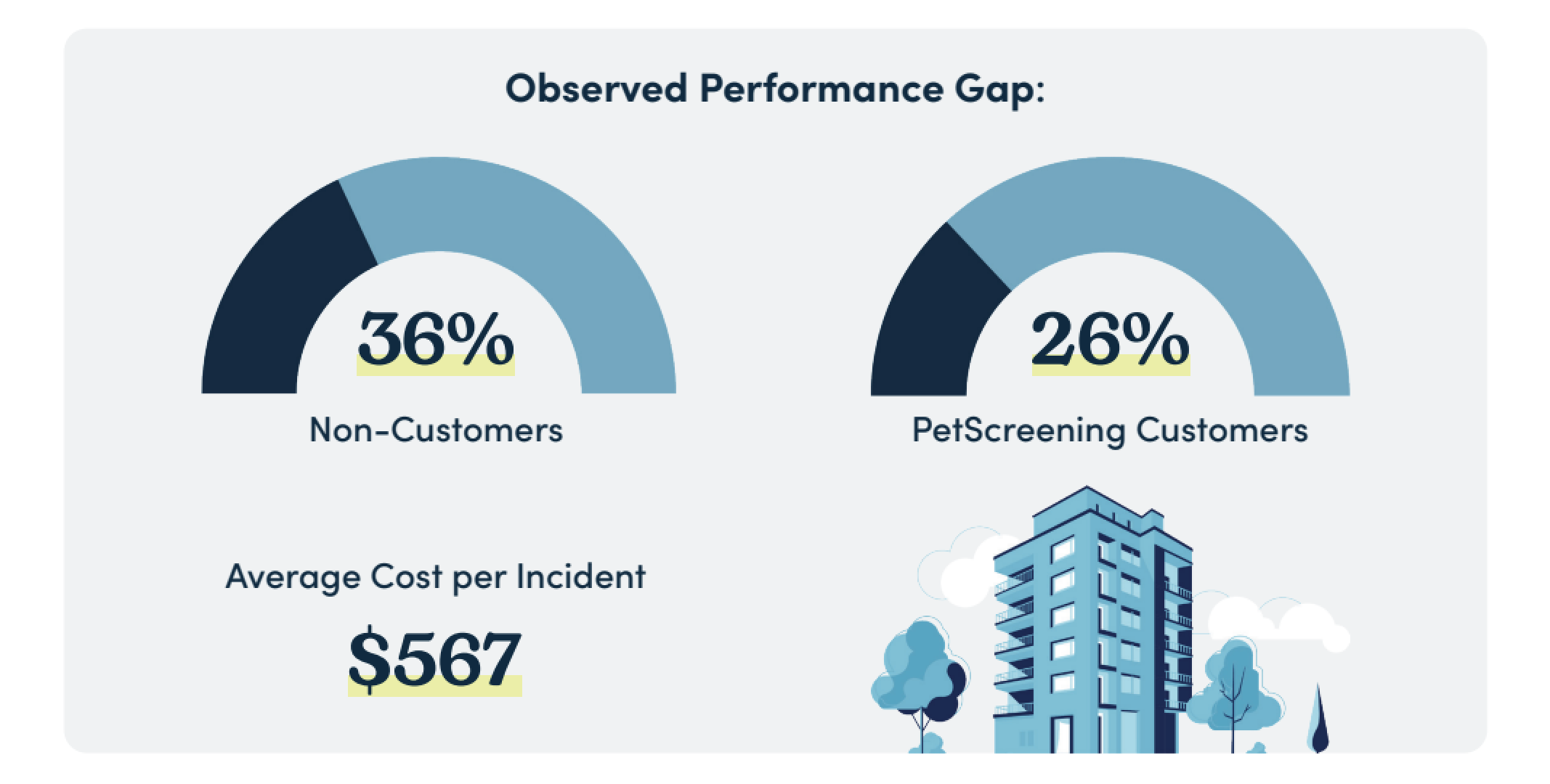
Data shows a clear divide:
That 10% gap represents millions in preventable cost at scale.
The conclusion is straightforward. Waiting introduces avoidable risk across both liability and property damage. Acting early reduces both frequency and severity.
Key Takeaways:
The most expensive risk is not just pets, it is undocumented pets.
When pets are not properly disclosed or tracked:
This significantly increases the likelihood of bite incidents and injury claims.
From a legal standpoint, this creates a dangerous combination:
Securing written records from the pet owner on their pet’s training and/or aggressive tendencies shows resident accountability, creating due diligence for the landlord.
With structured pet screening, disclosure rates increase because residents are required to affirm accuracy. This creates a natural shift toward transparency and reduces unauthorized pets, directly lowering operational and liability risk.
Dog-related incidents represent one of the most volatile liability categories in multifamily housing.
These events are infrequent, but when they occur, they materially impact portfolio performance.
Premises liability consistently reinforces one principle:
What you knew, or should have known, determines your exposure.
All establish knowledge.
Failure to act on that knowledge creates liability.
The pattern is consistent. Documentation and action determine outcomes.
While liability claims draw attention, pet-related damage is the silent profit drain.

For a portfolio of 100,000 units with 70 percent pet ownership:
Even with insurance, meaningful risk remains on the balance sheet.
Delaying pet screening does not hold risk constant. It increases it.
3 dynamics drive this:
Unauthorized pets compound over time, increasing both damage frequency and incident probability.
Without structured records, operators lose the ability to demonstrate awareness and action, increasing legal exposure.
Teams make daily decisions without full visibility, increasing the likelihood of preventable incidents.
In practice, this means:
Implementing structured pet screening directly impacts both frequency and severity of risk:
Pet-related risk is not a future problem. It is a current, measurable financial exposure.
The data is consistent across portfolios:
Operators are not choosing whether to incur these costs.
They are choosing when and how much.
Delaying action increases exposure, reduces control, and weakens legal defensibility.
Proactive pet screening does not eliminate risk.
It makes it visible, manageable, and materially less expensive.
Sources:
https://www.forbes.com/advisor/legal/personal-injury/average-dog-bite-settlement/
https://www.insurancejournal.com/news/national/2025/04/25/821236.htm


