Student housing operators are entering a new operational era driven by three converging forces: record housing demand, rising pet ownership among Gen Z renters, and growing Emotional Support Animal (ESA) accommodation requests.
At the same time, the sector operates on a uniquely compressed timeline. Students often sign leases 6–12 months before move-in, yet pets and ESA documentation frequently appear only days before arrival, placing significant pressure on property teams during already intense move-in periods.
Industry data underscores the scale of this challenge:
In student housing communities with hundreds of residents arriving in a single weekend, even small operational inefficiencies can quickly scale into major disruptions.
At the same time, pets represent a meaningful revenue opportunity. Research from the 2026 State of Pets in Rental Housing report shows that communities implementing structured pet screening systems reported an average 30.72% increase in pet-related revenue, while also reducing pet-related property damage.
Forward-thinking student housing operators are responding by implementing structured pet and ESA management systems that align with their leasing timelines. These systems allow properties to:
As the student housing sector continues to operate at near-record occupancy levels, operators that modernize their pet management infrastructure today will enter future leasing cycles with stronger operational control, improved compliance confidence, and measurable financial advantages.
Student housing demand remains exceptionally strong across the United States.
According to Yardi Matrix, student housing communities serving the top 200 universities achieved 95.1% occupancy for the Fall 2025 academic year, representing one of the strongest performance levels since before the pandemic.
Pre-leasing velocity also remains extremely high:
These figures illustrate a defining feature of the student housing sector: leasing decisions occur months before occupancy, compressing operational activity into a short move-in window.
When hundreds or thousands of students arrive within days, operational issues, such as undocumented pets or last-minute ESA requests, can quickly escalate.
Student housing continues to generate strong financial performance.
The National Multifamily Housing Council (NMHC) Student Housing Income & Expense Survey reports that net rental income across participating properties increased 13.4% between 2022 and 2024.
The survey includes:
These results demonstrate the sector’s resilience and highlight the importance of protecting operational efficiency and ancillary revenue streams, including pet-related income.
Assistance animals, including both service animals and emotional support animals (ESA), are increasingly common in rental housing communities.
According to the 2026 State of Pets in Rental Housing report:
On a 600-bed student asset, that can translate to nearly 100 assistance animals on-site.
Meanwhile, national pet ownership stands at 71% of U.S. households, yet only 43% of renters report pets. This discrepancy indicates a substantial visibility gap between actual pet ownership and reported animals in rental communities. That gap often represents underreported animals, missed revenue, and unmanaged risk.
In student housing, the issue is amplified because leases are executed months before occupancy, delaying documentation until the last possible moment.
Gen Z renters bring different expectations to rental housing.
Research shows:
Pets are also increasingly associated with mental health and emotional wellbeing, which contributes to rising ESA accommodation requests.
For student housing operators, this shift means pet policies are no longer simply operational rules, they are competitive leasing strategies.
PetScreening customers reported an average 30.72% increase in pet-related revenue after implementation.
If implemented this spring:
That impact compounds across renewal cycles.
Next year’s NOI does not improve because of better intentions. It improves because of better systems deployed this year.
Survey respondents report that 31.47% of units experience pet-related damage, averaging $567 per affected unit.
More importantly, PetScreening customers reported damage in 26% of units versus 36% for non-customers.
A 10-point reduction in affected units can materially reduce turn season surprises.
If deployed before the next leasing cycle, operators enter 2027 with:
That is forward planning. Not a reaction.
Student housing’s core operational challenge is timing.
Students sign leases six to twelve months before move-in, yet ESA documentation obtained at signing may be outdated by the time residents arrive.
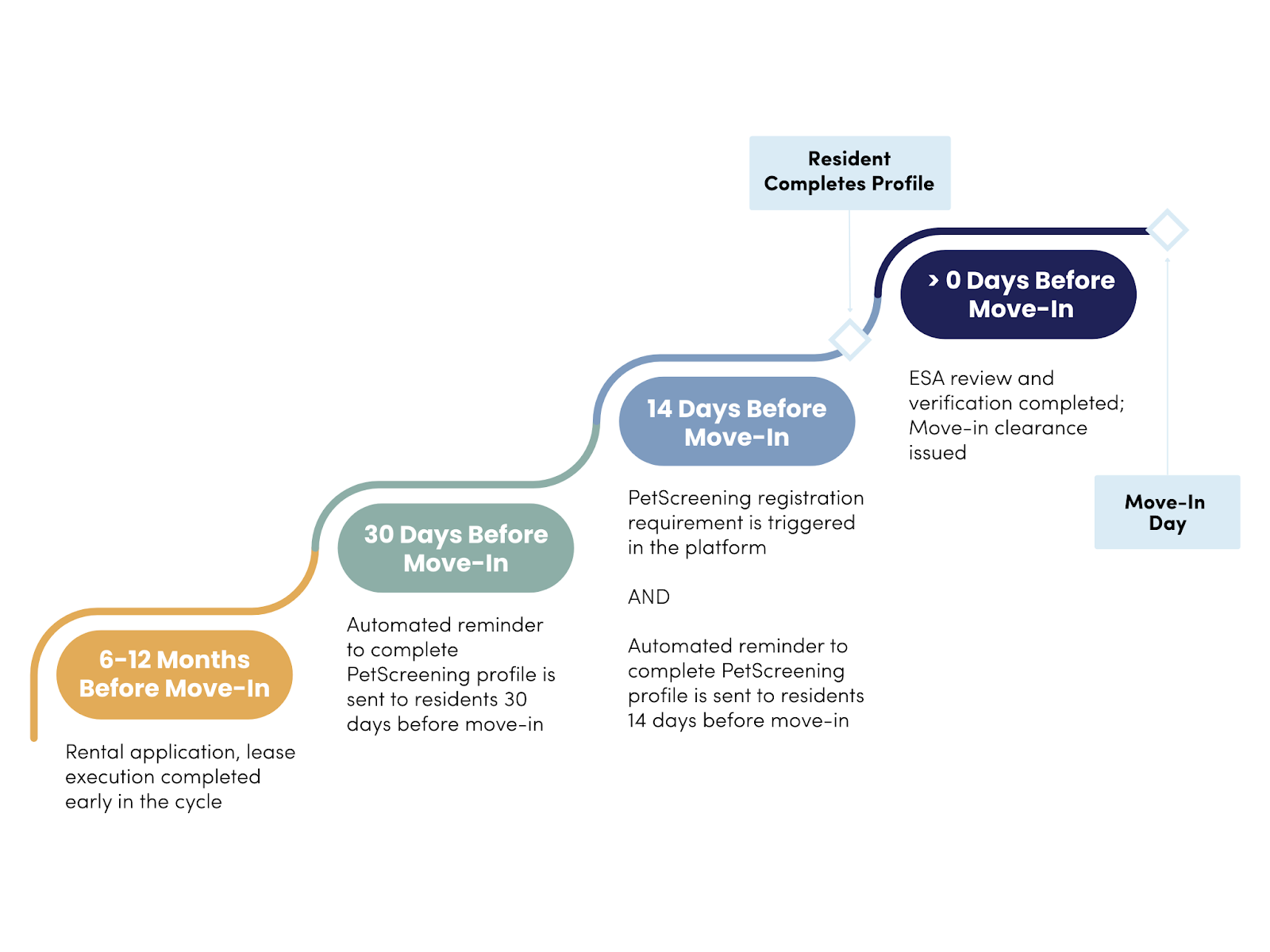
This approach ensures:
Instead of processing ESA documentation in the middle of turn chaos, properties resolve it weeks in advance.
Allowing pets drives performance:
For student housing, renewal acceleration and early pre-leasing velocity determine stability. Pet inclusivity can widen the applicant pool, particularly among upperclassmen seeking independence and flexibility.
But inclusivity without verification introduces chaos.
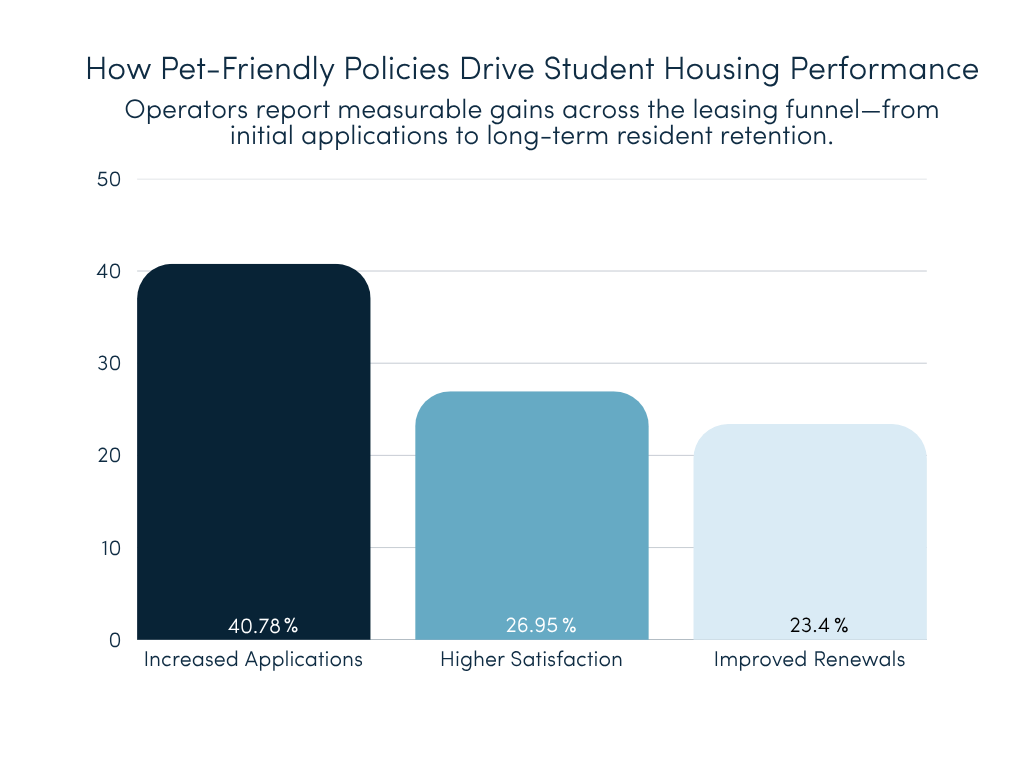
Leading operators are shifting from blanket restrictions to structured risk management frameworks.
Rigid breed or weight bans reduce the renter pool without significantly reducing risk. Replacing these restrictions with structured screening allows operators to maintain oversight while expanding applicant pools.
Benefit: Larger renter pool, higher application volume, fewer policy workarounds.
Risk varies by pet and owner behavior rather than breed alone. Individual screening enables consistent and defensible approval decisions.
Benefit: Precision risk management, stronger documentation, reduced liability exposure.
Standardized verification ensures accommodation requests are reviewed consistently and aligned with Fair Housing Act guidance.
Benefit: Reduced compliance risk, fewer disputes, stronger audit defense.
Manual tracking through paper or spreadsheets cannot keep pace with high student housing volume. Centralized technology provides real time visibility into all pets and assistance animals onsite, automates fee capture, and creates portfolio wide reporting consistency.
Benefit: Administrative efficiency, improved revenue capture, scalable compliance control.
That is how you expand the renter pool without expanding liability.
You widen access through smarter screening, not looser oversight. The result is growth supported by infrastructure instead of growth that introduces risk.
By implementing PetScreening before the next leasing cycle, student housing operators can expect:
Within 6 Months
Within 12 Months
By 2027 Leasing Season
Student housing is uniquely exposed to pet and ESA complexity due to early leasing cycles and compressed occupancy windows.
The 2026 data is clear:
The forward-looking operators will not wait for another chaotic move in weekend to address this.
They will design the system now so that next year runs smoother, more profitable, and more defensible.
Student housing does not need stricter pet policies. It needs smarter pet management infrastructure. The operators who implement that infrastructure today will feel the difference by the next leasing season and in their 2027 portfolio performance.


