Let’s face it: working in property management is not for the faint of heart.
Between the pressure to meet financial goals, market to new residents, keep current residents satisfied and navigate staffing shortages, it’s more than understandable that mental health is often an issue.
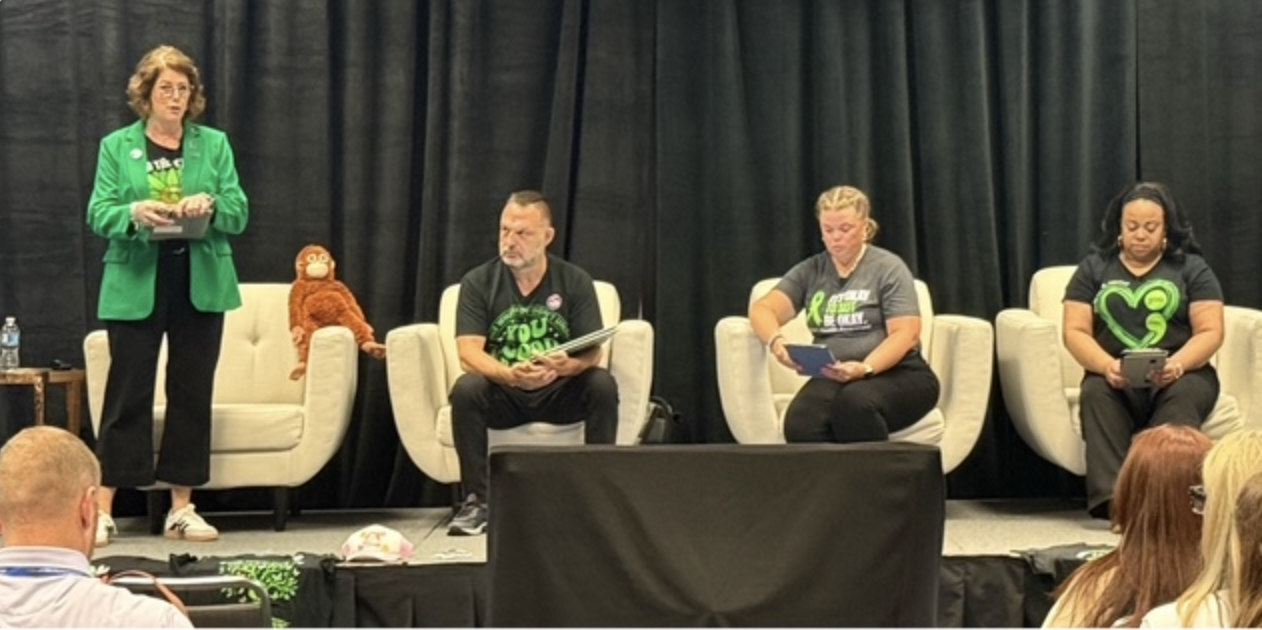
At Apartmentalize 2026 in New Orleans, Petscreening Vice President of Education Victoria Cowart moderated the Renew Your Lease on Mental Health: Your Roadmap to Personal & Team Wellness session, which examined the unique stressors of the property management industry, their impact on well-being and performance and the resulting effects across an organization. Cowart and her panelists also discussed actionable strategies to foster a supportive workplace culture and promote positive mental health outcomes. Just as importantly, they sought to erase the stigma that too often accompanies mental health challenges.
“It's OK to not be OK,” said John Sons, Director of Training and Marketing Strategies at Burlington Capital Properties, who, like the other panelists, is a certified Adult Mental Health First Aid Instructor. “I know you've heard that before, but it is OK to not be OK.”
According to the panelists, U.S. employees as a whole are struggling with job pressures. Citing a variety of sources, they noted that 83% of workers in the U.S. suffer from work-related stress, and 44% say work stress is a top mental health challenge. Each year, a total of 120,000 deaths in the country can be attributed to workplace stress.
In the apartment industry itself, 23% of site teams and 66% of regional teams say they’re working more than 50 hours a week.
“We’re always being asked to do more with less,” said Ebony Parks, Instructional Design Training Manager at Mercy Housing. “And the blurring of work-life boundaries, that’s another big issue in our industry. We’re so connected with our tablets and our cell phones at all times. We’re still taking calls and sending emails at 9 p.m. That’s a really huge workplace stressor that a lot of people are dealing with.”
Swift Bunny’s 2025 Mental Health Survey of the apartment industry also revealed that stress about compensation, workload and staffing is common.
Team well-being begins with individual team members practicing daily self-care, said the panelists, noting only 32% of U.S. adults report doing so.
“It’s OK to take care of yourself,” Sons said. “It’s not a selfish act. You can’t be good at anything else or for anybody else if you don’t take care of yourself.”
Self-care has multiple dimensions—physical, social, mental, spiritual and emotional—and can be addressed in small steps, added Stephanie Loyd, National Account Executive at Smart Apartment Data.
“I don’t have a lot of time, so I have to figure out what can I do that brings me joy in the limited amount of time that I have?” she said. “If I’m in the car, is it listening to a podcast? Is it singing at the top of my lungs to 90s pop? That brings me joy.”
Self-care is also not a one-size-fits-all equation, Loyd said.
“It's different for everyone,” she said. “Just because your plan is one way, and John's is another—we don't have to have the same plan. We just need a plan, right? It's whatever works for you, and everyone's gonna be different.”
Cowart said team members should address their own needs before trying to help others navigate their own challenges.
“It’s like when you’re on an airplane, and they tell you that if there’s a change in cabin pressure, you should put on your oxygen mask and make sure it’s working before you attempt to help others,” she said. “If you're not doing well, and you see somebody with existing or worsening mental or emotional distress or a substance abuse disorder, and you try to be impactful, the impact could be bad.”
Empathic listening, in which a person listens non-judgmentally with the intent of understanding the speaker and does not try to “fix” anything or offer unsolicited advice, is critical to helping struggling co-workers, the panelists said.
“There is no way that you can be a good leader—no way—if you don't know what empathic listening is and you don't practice it,” Sons said.
Additionally, team members have to be OK with co-workers becoming emotional or showing signs of distress, such as weeping, Cowart said. “Embrace the awkward. When that comes at you, stand in it.”


