Presumably, you don’t need this article to inform you that people are crazy about their pets. Spend any amount of time on social media or out in the real world, and that truth becomes blindingly clear. Americans simply love their dogs and cats (and their other furry friends)—and rental-housing operators need to proceed accordingly.
At Apartmentalize 2026 in New Orleans, PetScreening Vice President of Education Victoria Cowart moderated the Pets Are the New Kids: Unleashing Leasing & Revenue Potential session, which explored best practices in pet policy management, offered strategies for implementing pet-inclusive policies and highlighted the potential of those policies to improve financial performance.
Offering great living experiences for pet owners and effectively marketing those experiences is how apartment communities “bring renters in, and this is how you keep them for a longer period of time,” Cowart said. “Bring ‘em in and keep 'em: That's what we try to do. So, this is the secret right here. It's literally all about the pet.”
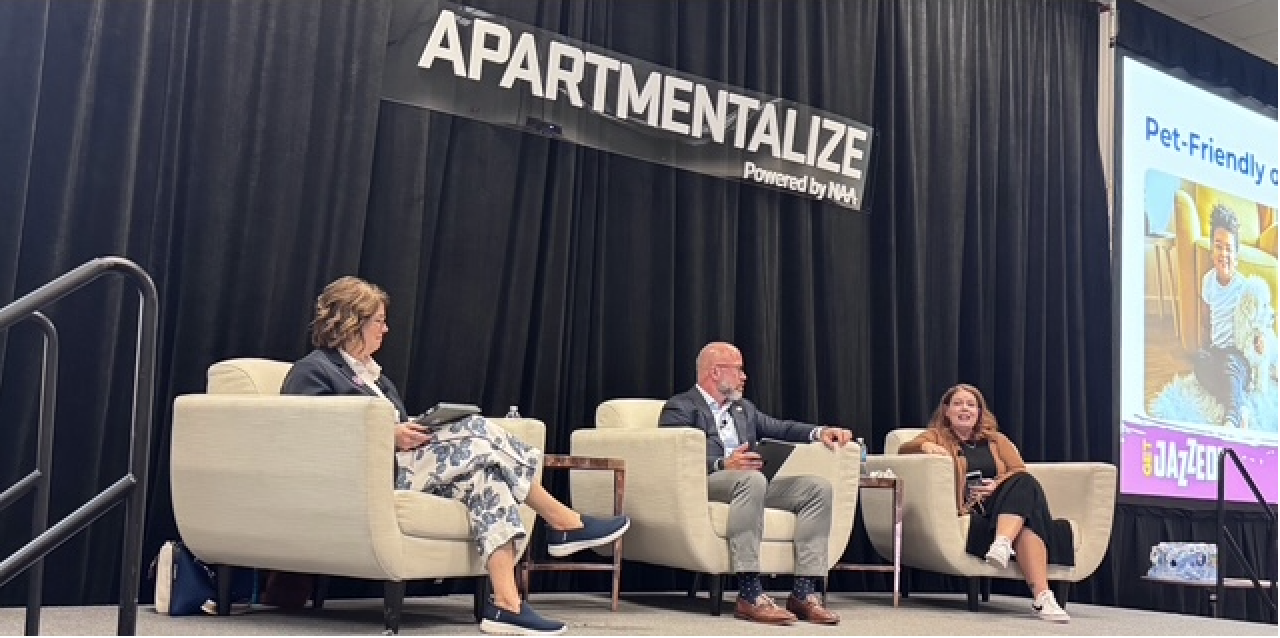
The statistics are compelling. According to panelists, 71% of U.S. households owned a pet in 2025, and 59% of renters live with a pet. Going a step further, 97% of pet owners consider their animals to be part of their family. However, 60% of pet-owning renters say they struggle to find a suitable place to live for their household.
It’s clear these dynamics offer apartment operators a valuable business opportunity. But, “what we're finding is properties are not really marketing to pet parents,” said Stephanie Thornberg, Vice President at Avenue5 Residential. “A lot of times, properties will say they are pet-friendly, but then they don't really know how to quantify that. You really have to ask yourself, ‘Are you pet-friendly, or are you pet-tolerant?’ And if you're part of the 40% that are not marketing toward pet parents, then I think you're doing something wrong.”
Todd Whitlow, Director of Legal Operations and a Partner at Brownlee Whitlow & Praet law firm, echoed similar sentiments.
“If you're not promoting to pet owners, you're really missing out,” he said. “The way in which Gen Z and Millennials search for apartments is oriented around is it easy for their pet to be there? What amenities are in place for their pet? Is there a dog park? Is there a wash station? Those types of things are really important to this type of renter.”
To maximize their ability to attract and retain pet owners as well as manage risk, operators should consider the following pet policies, the panelists said:
Communities should also evaluate their onsite amenities and consider if any additions, such as a bark park, waste-bag station, pet-washing facility or pet-focused events, are feasible. In addition, with more pets onsite, operators should make sure they’re vigilant about enforcing vaccine requirements, the panelists noted.
Among the benefits of pet-inclusive policies is increased occupancy rates, Cowart noted.
“One study I saw said you can improve your overall occupancy by 4%,” she said. “That sounds like a low number, but when you do the math on that across a whole portfolio, that's a lot of money.”
Pet-friendly units also lease 10 days quicker on average, Cowart added.
After adjusting policies to attract pet owners, operators need to proceed with their implementation carefully, according to Thornberg.
“The first step is training, making sure the on-site teams are aware of the changes in your pet policies, and that everyone is aware of how you're moving forward,” she said. “You want to make sure that you're messaging it appropriately to the residents, that you're really communicating that you are a pet-friendly property and that you want to have their pets there.”
In the end, attracting renters in today’s climate is a fairly straightforward proposition, Whitlow said. “The best way to maintain competitiveness, to get your property leased up, is to have reasonable policies that are pet-passionate.”
Cowart and the panelists also discussed the current legal landscape surrounding reasonable accommodation requests for assistance animals.
Recently, the U.S. Department of Housing and Urban Development issued a memo indicating that housing providers are no longer expected to categorically grant accommodation requests for emotional support animals.
For a variety of reasons, though, Whitlow urged operators to continue evaluating ESA accommodation requests the same way they did before the memo. “I was talking with someone at one of the strategic exchanges earlier today, and he indicated that he’s instructed his team to not even read the memo, because it’s just going to be confusing,” Whitlow said.


